
AP Macroeconomics and Global History teacher

I teach high school, and I build what my students use.

I plan each school year end to end, build the review games my students play, and lead AI at my school with faculty demos and one-on-one coaching. Outside school, I build AI tools for small businesses.

  • 106 students a year
  • In classrooms since 2016
  • M.S. in Education, Pace University
David Bassin
David BassinTeacher who builds

If you are hiring

What you need, and the proof.

  1. Knows what works with real students

    In classrooms since 2016. I teach 106 students a year in AP Macroeconomics and Global History, and I design both courses.

  2. Designs curriculum end to end

    I plan each school year with AI: every AP Macro topic on a named class day, tests on the school's exam days, and sub-ready plans for sick days. See the AP Macro plan

  3. Builds with AI and ships

    Seven AP Macro games, a whole-class trading-floor game, a 3D review game with 213 voiced lines, and AI tools that two small-business owners used. See the work

  4. Checks AI output like a grader

    As a first reader on 87 essays, AI scored one a 79 that earned a 96. I check every score, every fact, and every number before it reaches a student.

  5. Teaches people who are not technical

    I run AI demos for my whole faculty and coach teachers one-on-one. Two small-business owners say I showed them how their tools work. Read what they said

  6. Careful with student data

    Student names come out before anything goes to AI. The Econ Arcade has no accounts, and scores stay on the device.

Try it yourself

See how I teach, in two minutes.

Two short demos: a round of Open Outcry, my whole-class trading-floor game, and the AI check I teach other teachers.

Breaking news 1 of 4

Frost destroys a third of Brazil's coffee crop

Market: coffee

Which curve shifts?

Price Quantity D1 S1 P1 Q1
Start: the market at equilibrium.

Selected work

Made for my own students first.

I build with AI, then check every fact and every picture. The live ones are free to try.

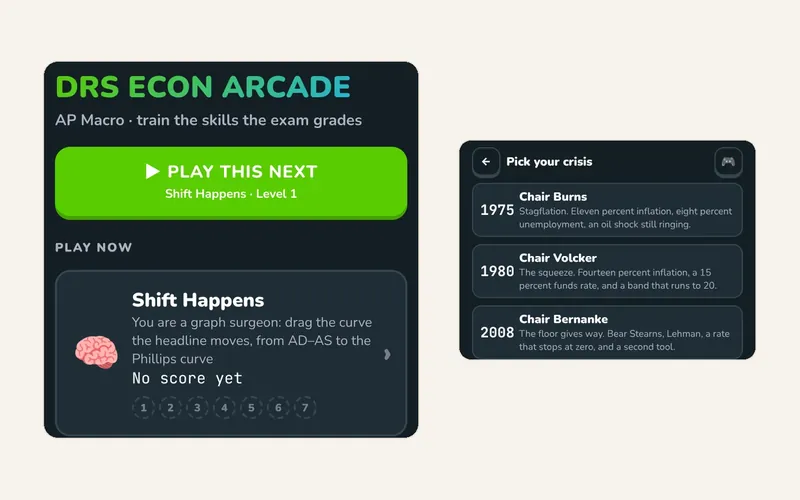
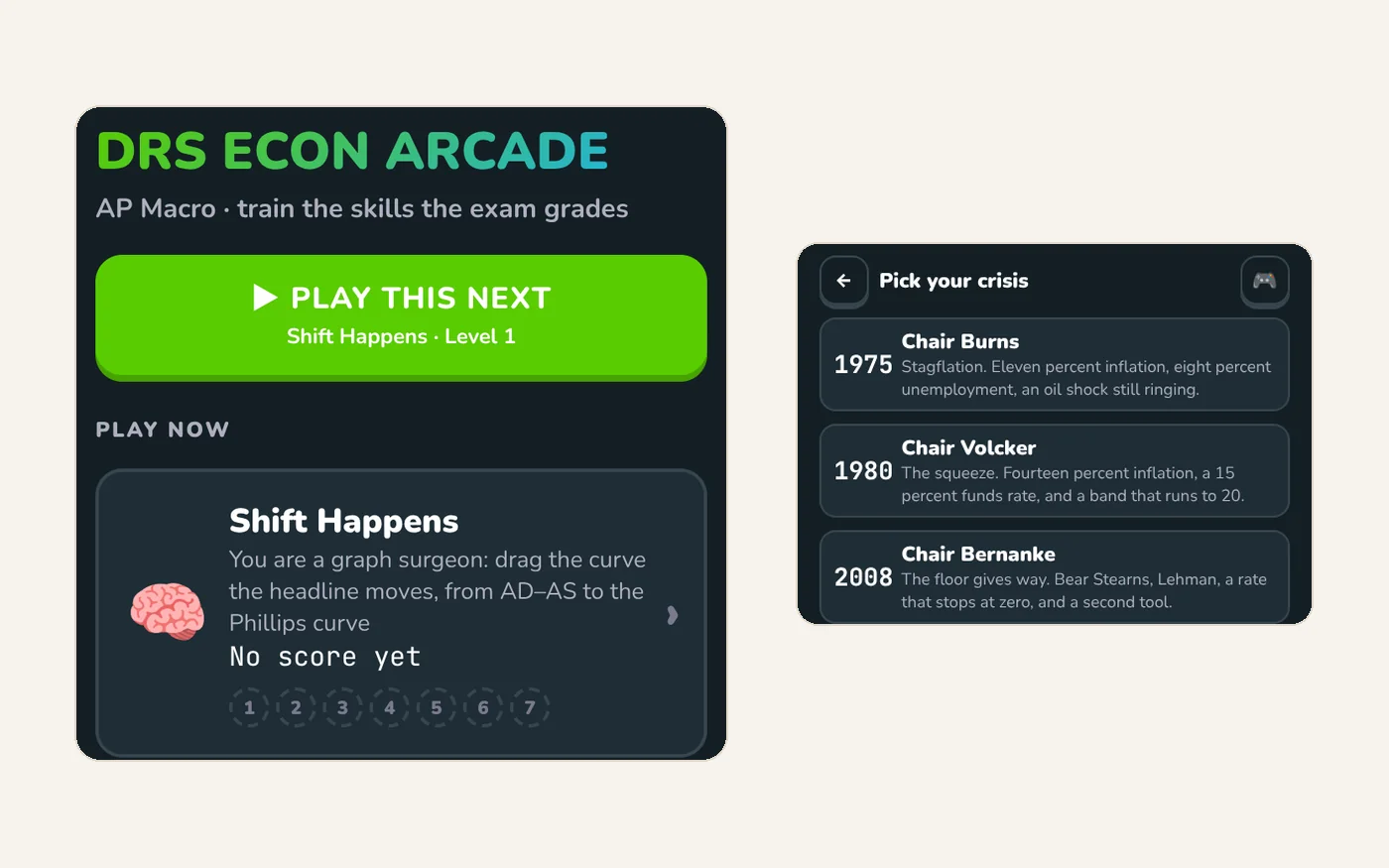
Two screens from the DRS Econ Arcade: the game list, and Fed Chair asking you to pick a crisis

AP Macroeconomics

The DRS Econ Arcade

Seven games for the skills the AP exam grades. Shift the curve a headline moves, run the Fed through 1975, 1980, 2008, or 2021, and find the mistakes on a graph. A one-line why follows every answer. A readiness panel shows each student a heat map of the six units and what to play next.

  • 7 games
  • No student accounts
  • Read-aloud and glossary
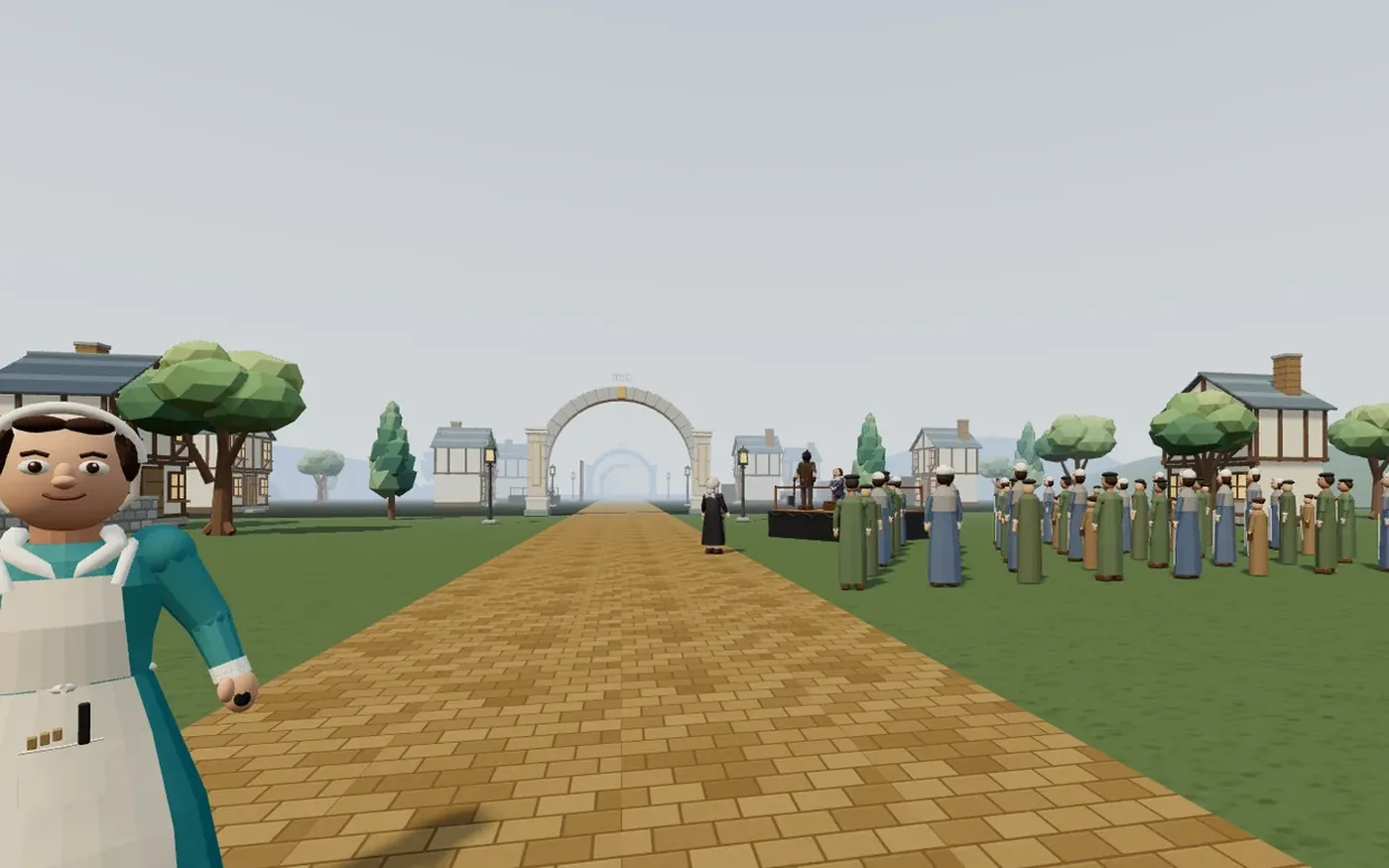
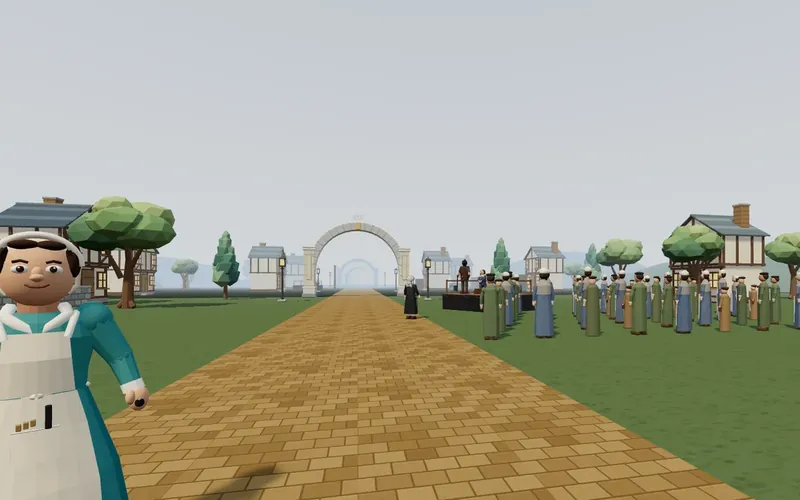
Road to Revolution: a 3D town square with a crowd and a stone arch at the end of a brick road

Global History

Road to Revolution

A 3D review game, 1649 to 1789. Hobbes, Locke, Montesquieu, and Rousseau teach inside the world.

  • 213 voiced lines
  • Saves with no account
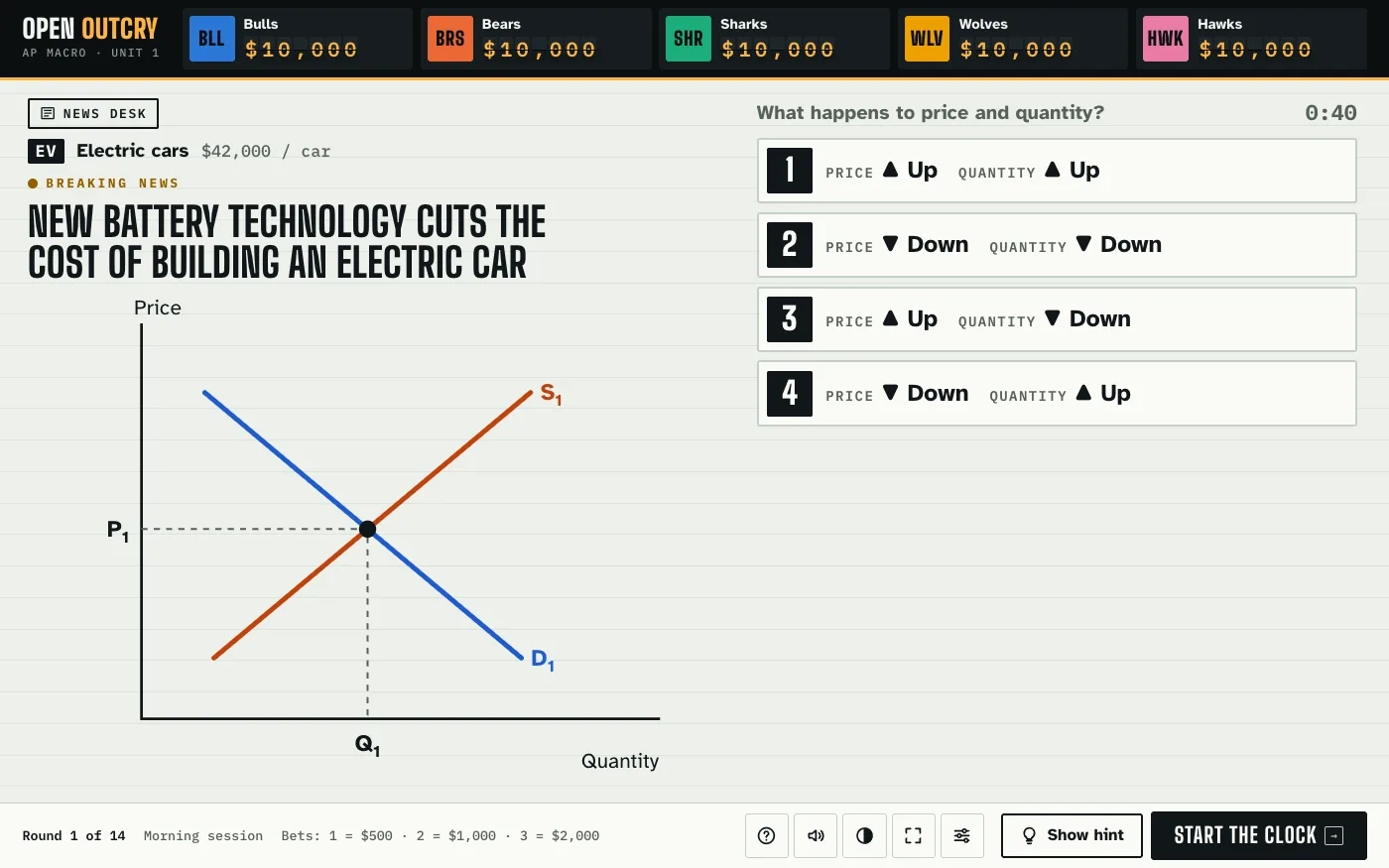
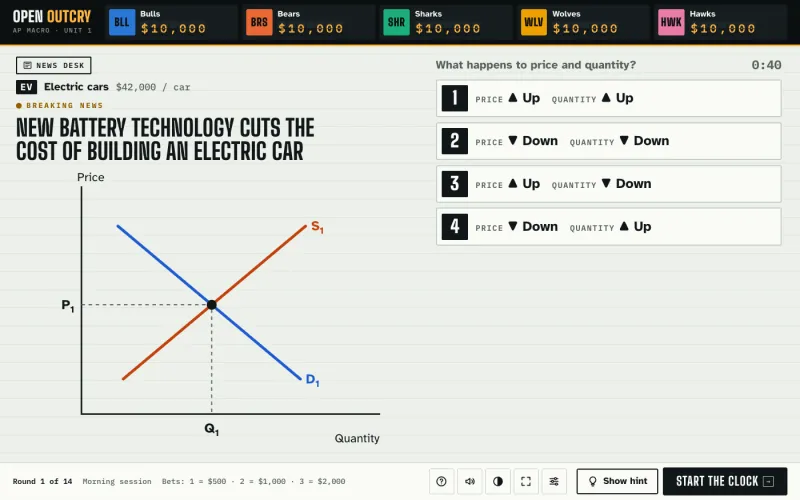
Open Outcry on a projector: a board of team money, a breaking news headline about electric cars, a supply and demand graph, and four numbered answers

AP Macroeconomics, whole class

Open Outcry

A trading-floor review game for the projector. Teams read a headline, decide which curve shifts, and flash one to four fingers for their answer. The answer key comes from the graph itself, so the two can never disagree.

  • No student devices
  • No accounts
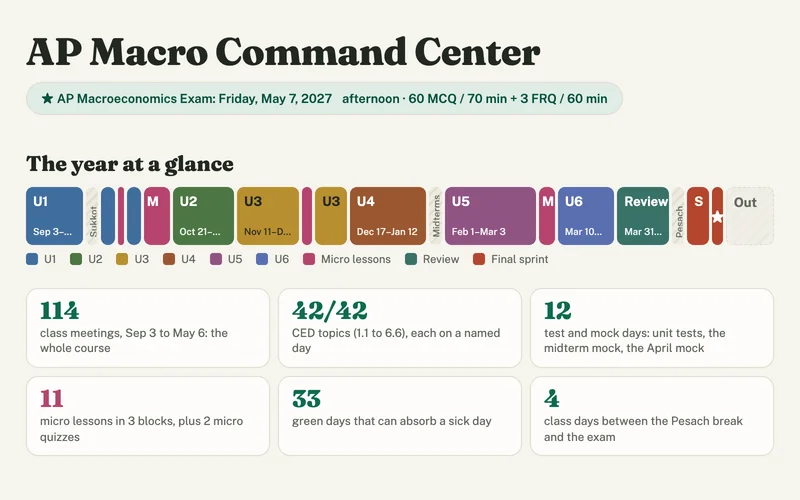
AP Macro Command Center: the 2026-27 year as color-coded unit blocks from September to the May 7 exam, with 114 class meetings, 42 of 42 topics on named days, and 33 days that can absorb a sick day

Curriculum design

Every school year, planned end to end

Global History 10: 127 class meetings on one calendar, with tests on the school's exam days and a tracker for sick days. AP Macro: all 42 College Board topics on a named class day, with sub-ready plans. I build both with AI and keep them current all year.

  • 127 class meetings
  • 42 of 42 AP topics
  • Sub-ready days
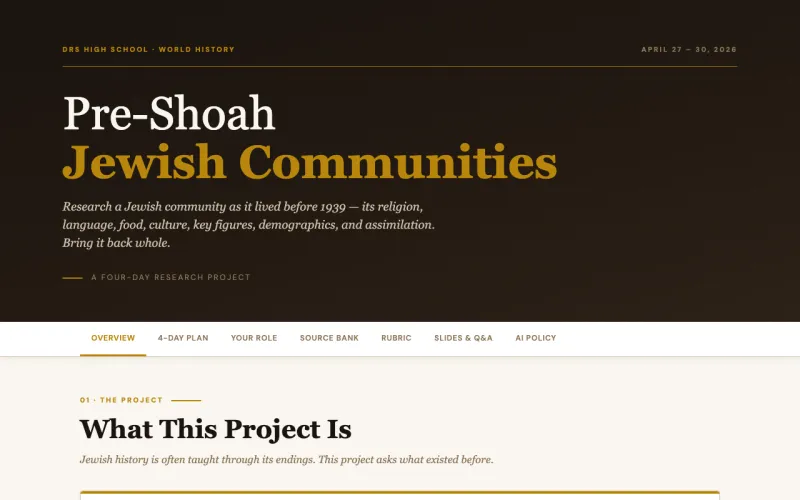
Project page for the Pre-Shoah Jewish Communities research project

Global History

A research project with honest AI rules

Four days, four research roles, a source bank, and a rubric. Students may use AI to present their work, not to do it, and a Q&A checks that they understand every slide.

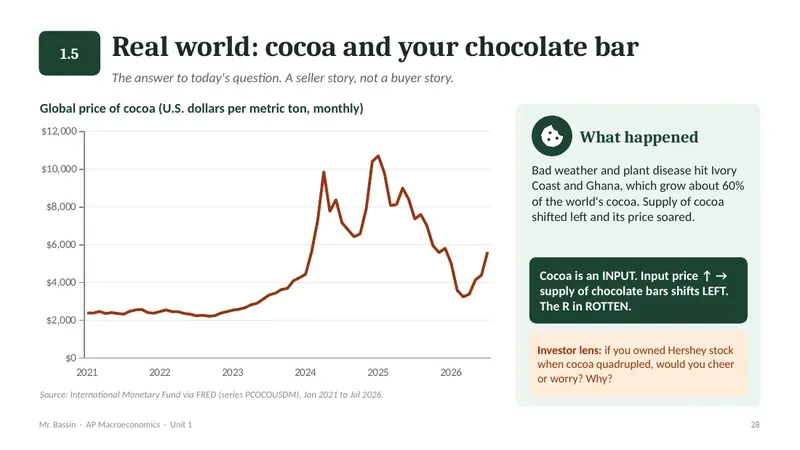
Lesson slide: real world, cocoa and your chocolate bar, with a price chart

AP Macroeconomics

Lessons built on real events

16 new lesson decks on real events and FRED data, and AP-style quizzes with answer keys, all planned backward from the May exam.

At my school

Leading AI with my colleagues

On the AI Task Force, I help the whole faculty use AI well.

  • Demos for the whole faculty
  • One-on-one coaching
  • Helped write our AI rules
  • A staff guide for year calendars

How I work

AI drafts. I decide.

AI makes the first version of the plan, the game, or the worksheet. It is fast, and it is a starting point. A teacher makes the call.

AI draft

AP Macro answer key

A price ceiling set crossed out: above, corrected to: below the equilibrium price causes a shortage.

Checked before it reaches a student.

  • Start with the job

    What does the person need at the end? A student needs to explain a graph on the test. That comes first, not the tool.

  • Check it like a grader

    I check facts against real sources, and I check every number and every picture. Nothing goes out before that.

  • Build for the people using it

    Spoken lines and big type when students need them. For everyone: it works on a phone, prints in black and white, and fits the systems people already use.

  • Leave the thinking to people

    The tool does the busywork. Students still draw the graph and write the why. People still make the call.

Time back for teaching

Less paperwork, more teaching.

I use AI as a first draft for the paperwork around teaching. Student names come out first, and nothing goes out until I check it.

Progress report comments

106 reports. AI drafts each comment from my notes, and I edit every one.

85%less time

Essay grading

87 essays. AI reads first, and I check every score.

63%less time

Teaching teachers

I help other teachers use AI well.

On my school's AI Task Force, I run demos for the whole faculty, coach teachers one-on-one, and helped write our AI rules.

I also wrote a step-by-step guide so colleagues can build their own year calendar with AI. These four work samples show how I explain things to teachers.

In their words

Two small-business owners I built tools for.

"I was spending hours every week just organizing new client information: pulling details out of emails, phone notes, and intake forms into our case management system. David built us an AI workflow that handles the extraction automatically. What used to take my paralegal half a day now takes minutes. But the best part is he actually showed us how it works so we're not dependent on him."

Eli LekhtAttorney, Solo Practice

"I was keeping track of everything in my head: customer calls, job estimates, follow-ups. David built me a system where I just talk into my phone after a call and it does the rest. Names, addresses, job details: it all goes straight into the database. I'm not a tech guy at all, but he walked me through everything so I actually understand how it works."

Ilya LuryeOwner, Pergola Construction

At home

The lab on my desk.

A Mac mini at home runs my own AI setup around the clock. It is where I try new tools before I use them for real.

For the chatbot, I tested AI for sorting the files and went back to plain rules, because they did better.

About

A teacher who builds, not an engineer who explains.

David Bassin

David Bassin

Teacher who builds

M.S. in Education, Pace University
B.A. in History, Baruch College

Where I have worked

  • History and Economics TeacherDRS Yeshiva High School for Boys, Woodmere, NY. 2020 to now. 106 students a year in AP Macroeconomics and Global History 10. AI Task Force.
  • Founder, Bassin Consulting2025 to now. Practical AI help for schools, ed-tech teams, and small businesses: workshops, coaching, and custom tools.
  • History and Personal Finance TeacherYeshivah Lev Torah, Brooklyn. 2018 to 2020.
  • Special Ed Teaching AssistantHebrew Academy for Special Children, Brooklyn. 2016 to 2018.
  • IT Support SpecialistM. Shanken Communications, New York. 2013 to 2015.

Get in touch

Let's talk about your students, your teachers, or your product.

Email is the fastest way to reach me.